

Unlocking Parental Insights
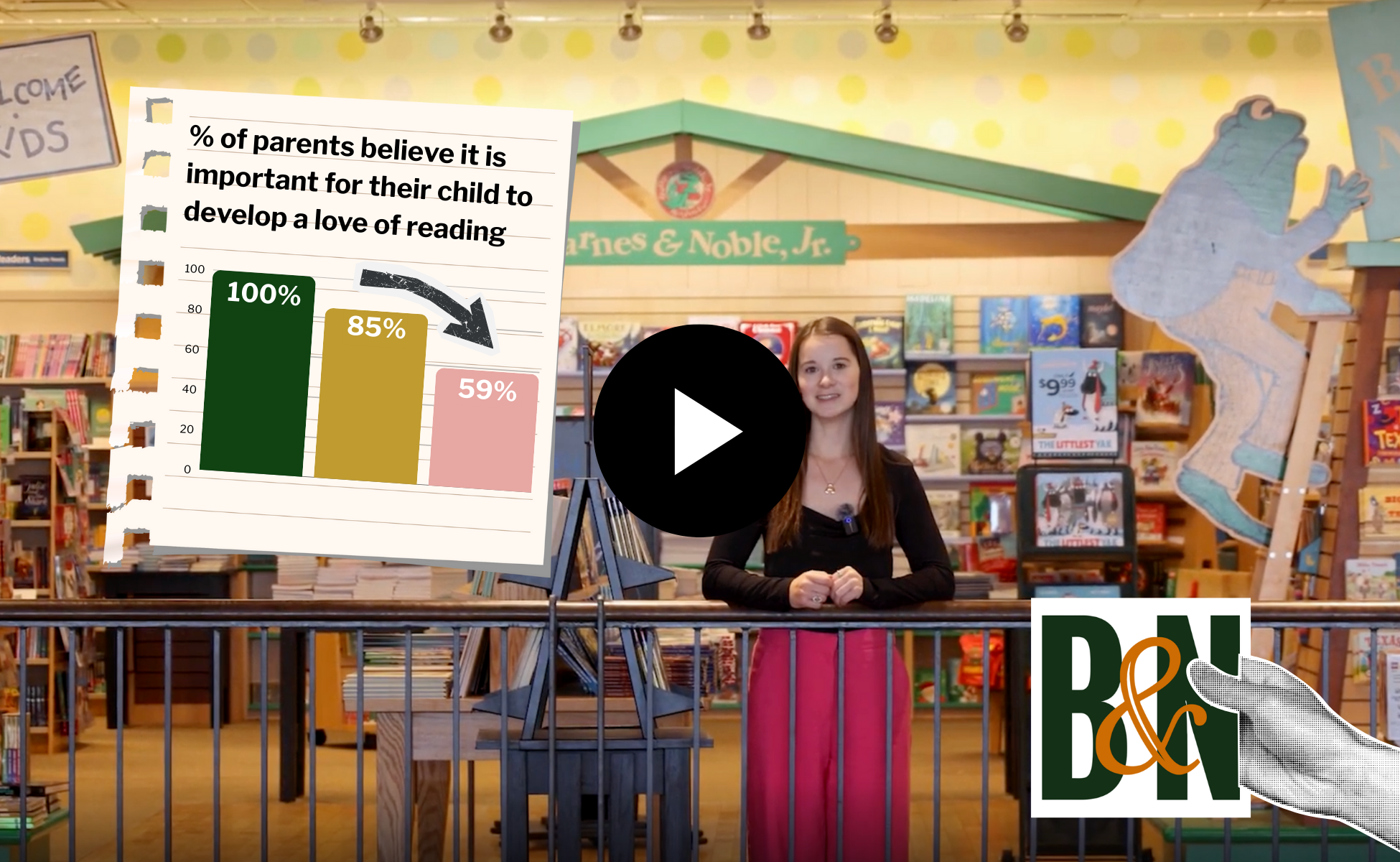
Situation:
Capstone Project for TTU Mass Communications Master’s Program, merging my interest in children’s literacy with an opportunity for one of my favorite brands: Barnes & Noble.
The Problem:
40% of U.S. students cannot read at a basic level (National Literacy Institute, 2024). Declines in literacy and reading interest among Gen Alpha have only worsened since the quarantine of Covid-19.
Meanwhile, Barnes & Noble is currently missing a huge opportunity to better target families in their advertising, and sustain their rebound success after opening over 120 stores in the past 2 years.
What strategy will position B&N as an important resource for young families, promoting both literacy and sales?
Research Questions:
1. Which factors predict parent behavioral intentions to encourage reading activities among and with their children?
2. Which factors predict parent’s intentions to shop at Barnes & Noble?
3. What advertising and marketing strategies should Barnes & Noble take to increase sales among parents of young readers?
Secondary Research:
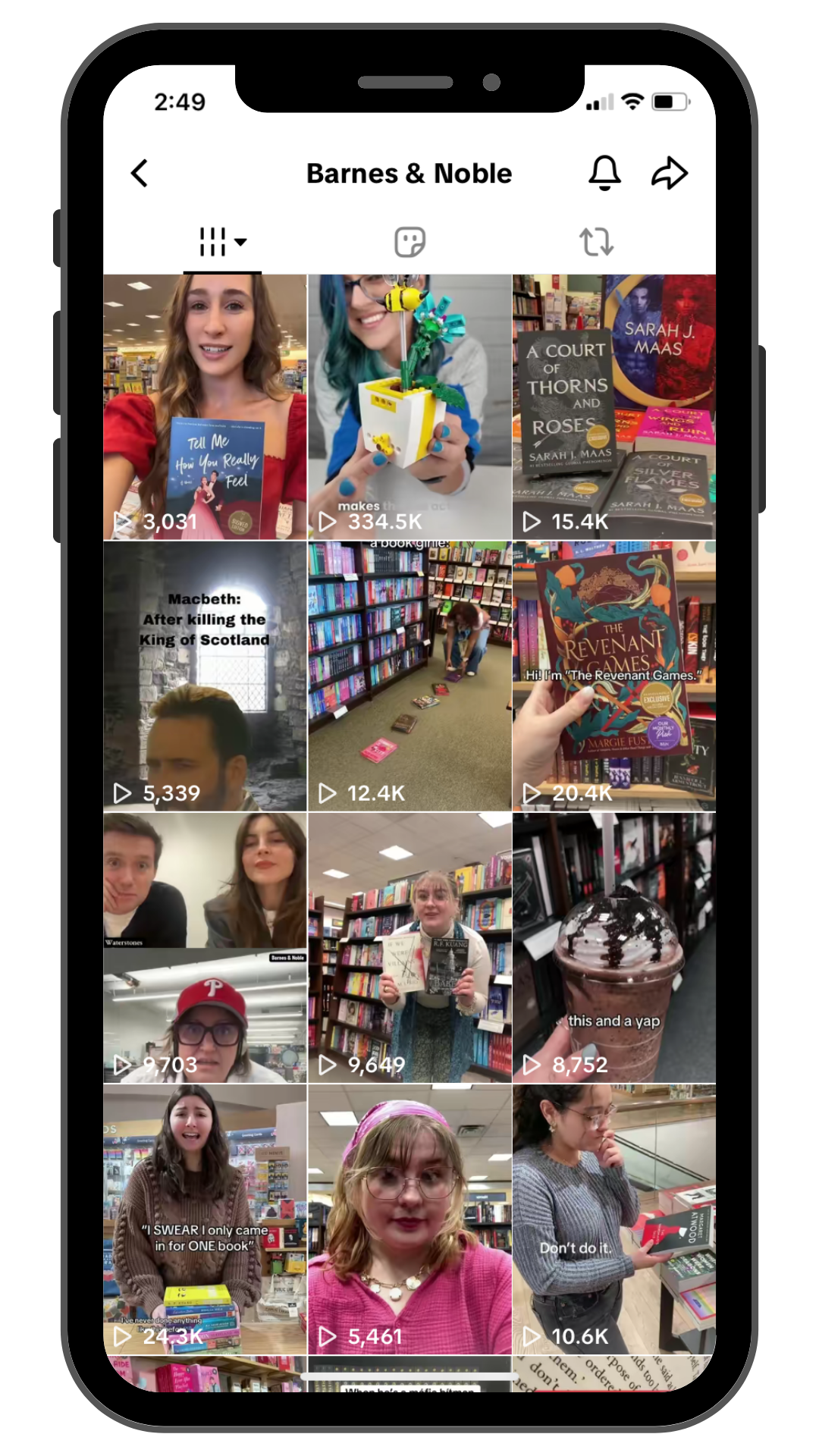
A brand audit identified a lack of traditional and digital paid ad campaigns and young reader content in recent years. The brand has honed marketing efforts on Instagram and TikTok. While successfully engaging fans through BookTok-style content, B&N does not reach new audiences, especially families.
Cultural analysis identified trends such as BookTok, ParentTok, iPad Kid discourse, “Rawdogging boredom” and revival in physical media collecting affecting the mindset and behaviors of young parents. Many are self-aware of their digital fatigue, but struggle to find balance with technology.
A competitive audit included a SWOT analysis, identifying Barnes and Noble’s unique selling point as its combination of in-store experience, wide selection, and new book ownership. Click to view.
The Theory of Planned Behavior explains behavioral intentions are not random, nor are they directly influenced by desire, but the result of several predictive elements: background factors, attitudes, social norms, and perceived behavioral control.
This theory guided the design and analysis of research, helping to identify communication improvements to drive desired behaviors for Barnes & Noble (increased parent-child reading and shopping).
Research Methods:
188 parents surveyed, 5 in-depth interviews.
Qualitative and quantitative data collected through purposive sampling of parents with children 12 or younger.
Key Results:
Parent Reading Habits
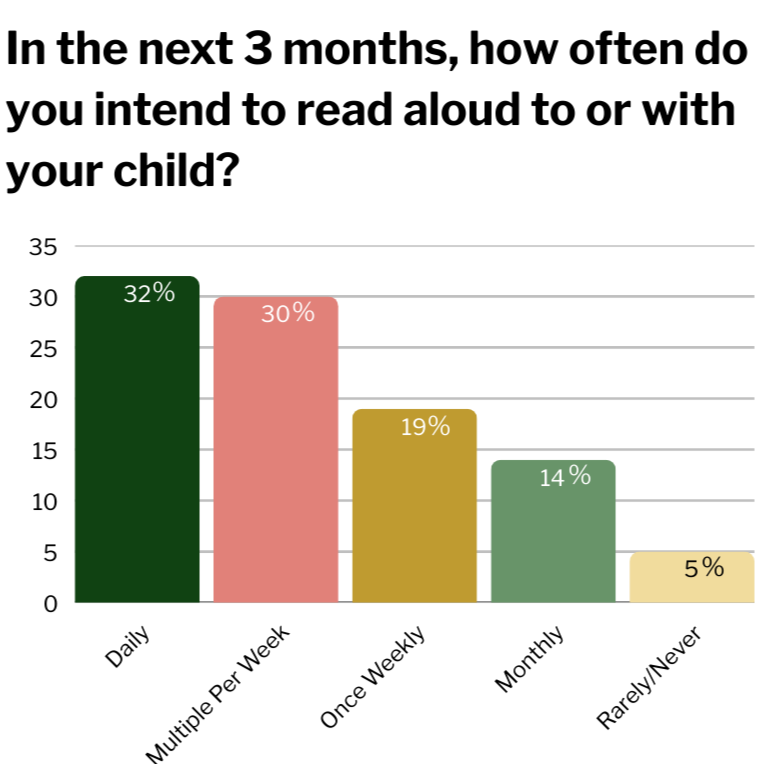

Although a majority of parents do intend to engage their child in reading, average intended frequency is lower than the daily 20-30 minutes recommended.
1. Which factors predict parent behavioral intentions to encourage reading activities among and with their children?
Higher parent age → predicted more positive attitudes → leading to greater reading intentions. (Click to view)
The Gen- Z Attitude Decline
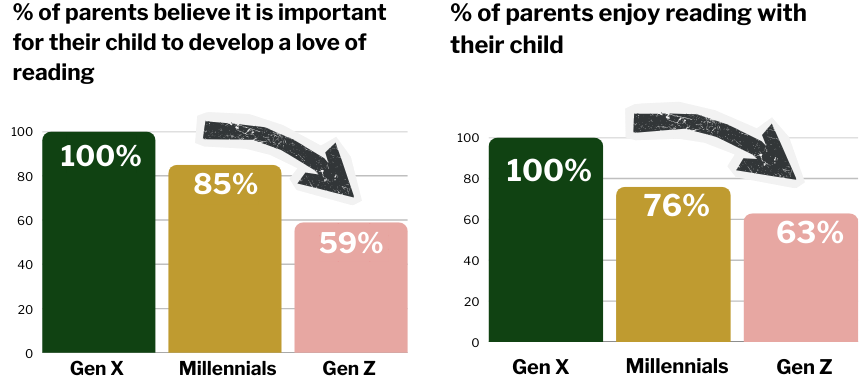
Younger parents show a decline in attitudes towards the importance of reading and reading enjoyment, leading to lower reading activity intentions. Although a majority of parents, including Gen Z parents, hold positive attitudes, this distinct downward trend is concerning, and heightens the need to re-enforce reading attitudes among young families.
Attitudes towards reading with child
Attitudes were most predictive of parent reading behavior. Interestingly, social norms (influence of one's peers/community/opinion leaders) and control beliefs (time and behavior challenges) were not significant predictors. Interview conversations revealed parent’s strongest positive attitudes were not only seeing their child’s developmental progress, but deepening their emotional connection with their child through reading.
“Reading with my child has been such a bonding experience—we enjoy exploring new stories together, and it’s helped build their imagination and vocabulary” (Anonymous Survey Respondent)
Barnes & Noble Shopping Habits
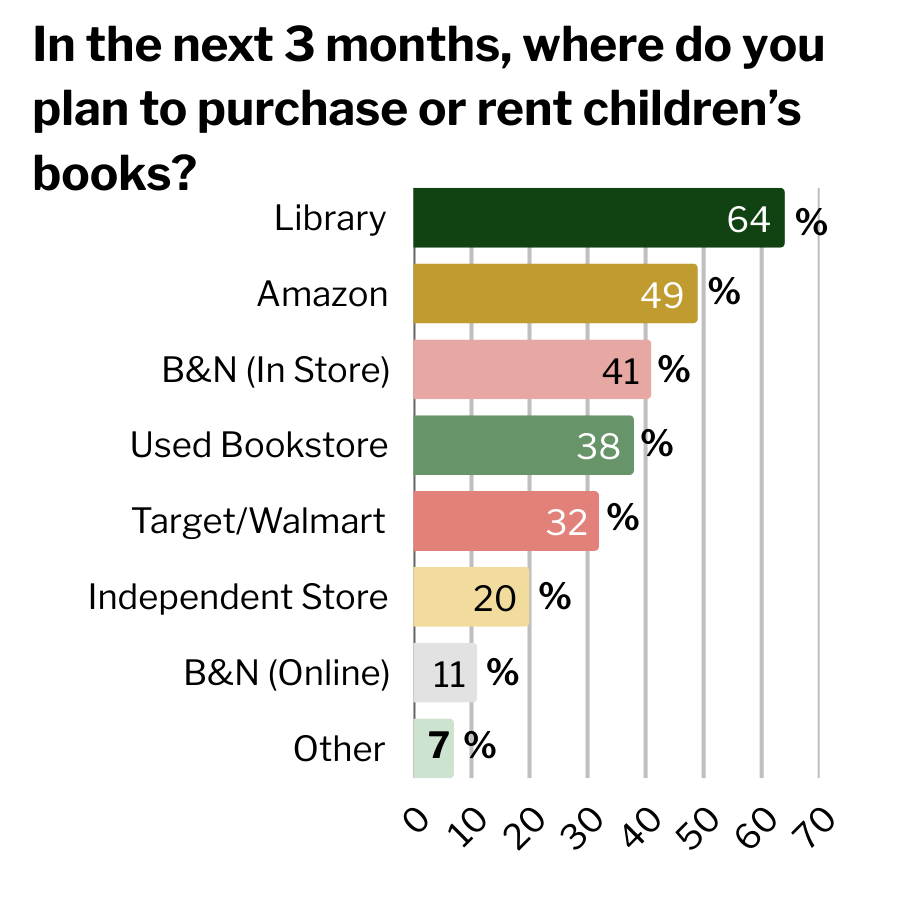
Currently only 41% of respondents plan to shop at B&N in the next 3 months, and only 11% online.
The Gen- Z Shopping Decline
Younger parents were slightly less likely to intend to shop at Barnes & Noble, potentially due to their lower attitudes towards children’s reading and desire for greater convenience.
“I think Barnes and Noble is a good brand, just not used as much with this generation. With everything going on digital platforms now it’s just more convenient to shop on kindle unlimited.” (Anonymous Survey Participant)
2. Which factors predict parent’s intentions to shop at B&N?
Attitudes, social norms, and parent age significantly predicated shopping intention at B&N. (Click to view)
Attitudes: The Key Driver of B&N Shopping Intention

Brand attitudes, the strongest predictor of shopping, were largely associated with the magical in-store experience families feel.
Families try new books through the library or other competitors, but purchase books they will get much use from or are emotionally attached to at Barnes & Noble.
“The in-store environment is very welcoming—my child enjoys browsing and picking out their own books, which makes them feel more engaged”(Anonymous Survey Participant)
“At the library we check out anything and everything. When we are at Barnes and Noble, we zero in on books that we know we're going to like.” (Mandi, Interview Participant)
Gifting was another major theme in interviews, with even parents who don't often shop at Barnes & Noble purchasing or receiving B&N kids books at Christmas or for baby showers.
“One of my girlfriends just had her first baby, and I got her a book, with his name personalized, and wrote a note in it.” (Laura, Interview Participant)
Social Norms: The second greatest shopping indicator
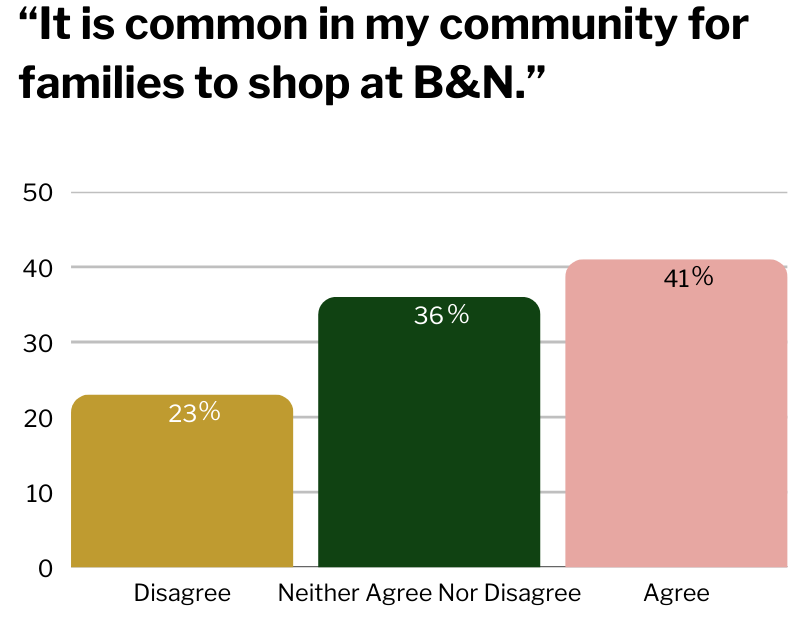
Since only 41% agreed shopping at B&N is common for families in their community, building social proof through advertising should be a priority for the brand.
Interestingly, price was not a statistically significant barrier to B&N shopping intent. This result highlights the power of brand attitudes, shaping perceived value and willingness to spend.
3. What advertising and marketing strategies should Barnes & Noble take to increase sales among parents of young readers?
Led by insights from culture, competition, company, and consumer research, an overarching strategy was formed.



Barnes & Noble is already succeeding as the destination for seasonal book gifting for children, and that idea can be expanded well beyond holidays. There are endless magical moments and life stages to be memorialized with a keepsake story from B&N: from a first haircut, to adopting a pet, and everything in-between. This strategy encourages parents to engage their child in their reading journey by gifting a book or taking them on an adventure to pick one out in store, reading that story many times, and saving it on their shelf as a keepsake forever.
Tactical strategic suggestions:
New campaign creative material for paid media placement
Influencer partnerships (Parent & BookTok)
Separate B&N Family social media accounts from main
AI-powered curated reading lists
Revive Children’s loyalty program
Increased, consistent kids events
In-store scavenger hunts
Registry (Birthdays, Christmas, Teachers, Baby Showers)
Birthday Parties with B&N
And more (Click to view)
Call to action:
The goal of this strategy to not only grow the Barnes & Noble brand, but also promote positive reading habits among families.
But, impact isn’t limited to big brands.
Researching for this project inspired me to mail a few storybooks to my young cousins, seek to volunteer locally, and even think about my future parenting.
My call to anyone reading is to encourage literacy among the children in your lives or your community whether through gifting books, volunteering, donating, or simply modeling your own love of reading.